

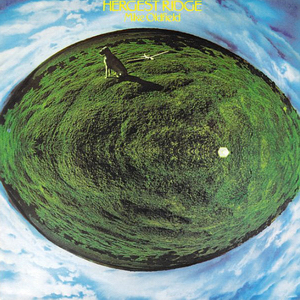
Hergest Ridge by Mike Oldfield
Click to rate this album
About the album Hergest Ridge
Mike Oldfield, tired of the sudden publicity, retreated to an isolated house on the England-Wales border. The album was named after the hill (Hergest Ridge) he could see from his window. Hergest Ridge, released in 1974, is Mike Oldfield's second album and serves as the natural, more introspective continuation of the legendary Tubular Bells.
The musical work consists of two lengthy instrumental parts (Part One & Part Two), following the structure of its predecessor. Oldfield played almost all the instruments, using the technique of layering (multiple recording layers). He used a custom effect, the Glorfindel Box, to give the guitars a sound reminiscent of a church organ. It is mainly categorized as progressive rock and pastoral folk, with strong elements of classical music.
Hergest Ridge reached No.1 on the UK charts immediately after its release in September 1974. After three weeks at the top, Hergest Ridge was dethroned by... Tubular Bells itself. This made Oldfield one of the few artists (along with the Beatles) to replace themselves at No.1.
${ comment.comm_first_name }$ ${ comment.comm_last_name }$
${ comment.comm_created }$${ comment.comm_content }$
${ reply.comm_first_name }$ ${ reply.comm_last_name }$
${ reply.comm_created }$${ reply.comm_content }$
No comments yet. Be the first to comment!