
At Folsom Prison by Johnny Cash
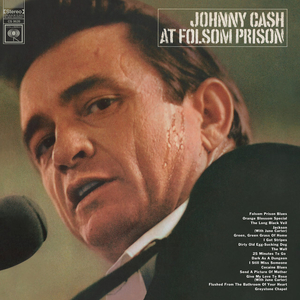
About the album At Folsom Prison
On January 13, 1968, the "Man in Black" stood before an audience of convicts at Folsom Prison in California, at a time when his career was sinking into drugs and commercial apathy. Cash's connection to Folsom had begun years earlier, in 1953, when, while serving in the Air Force, he saw the movie Inside the Walls of Folsom Prison. The film inspired him to write the iconic Folsom Prison Blues. Although he had never served a sentence in prison himself, his empathy for society's "damned" led to him receiving letters from inmates begging him to sing for them.
Despite objections from Columbia Records (url), Cash and producer Bob Johnston insisted on the recording. That cold morning, Cash gave two concerts. The atmosphere was electrifying: the sound of chains, the voices of the guards, and the rough laughter of the inmates became part of the soundscape. When Cash sang the infamous line "I shot a man in Reno just to watch him die," the audience's outburst (later amplified in the studio) sealed the album as the ultimate statement of nonconformity. One of the most touching moments was the performance of Greystone Chapel, a song written by inmate Glen Sherley. Cash learned the song the night before and presented it in front of its creator, proving that behind bars there was still humanity and talent.
The album was released in May 1968 and immediately became a success, bringing Cash back to the top of the charts. Beyond the music, At Folsom Prison turned Cash into a leading figure for prison reform, leading him all the way to the Capitol to testify on behalf of prisoners' rights.


${ comment.comm_first_name }$ ${ comment.comm_last_name }$
${ comment.comm_created }$${ comment.comm_content }$
${ reply.comm_first_name }$ ${ reply.comm_last_name }$
${ reply.comm_created }$${ reply.comm_content }$
No comments yet. Be the first to comment!